bio
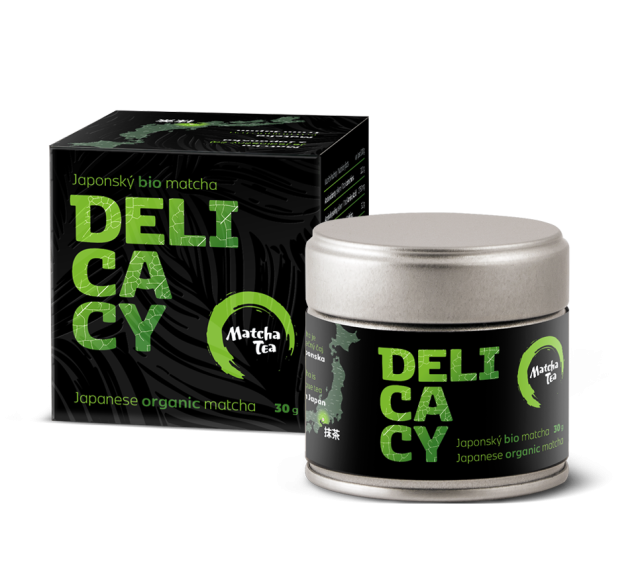
Bio Matcha Tea Ceremony 30 g
- Category
- Matcha Tea, Matcha Traditionally
- Code
- A102
Bio Matcha Tea Ceremony is 30 g of high-quality matcha. This extra-high grade of velvety tea powder is especially suited to the traditional Japanese tea ceremony. Create your own tea ceremony and enjoy matcha with friends, or start the day with meditation in a ritual proven over centuries.
Description
Why drink Bio Matcha Tea Ceremony?
♥ savour the tea of samurai, Zen monks and Japanese emperors
♥ bring Japan into your home
♥ enjoy peaceful moments with your loved ones

Matcha tea for moments of calm
The magic of Bio Matcha Tea Ceremony lies in the way it is served. The traditional tea ritual is meant for special moments, discerning customers and admirers of Japanese tradition. In traditional preparation, matcha is drunk from a tea bowl, slowly and meditatively. The slower pace of drinking allows all the beneficial substances in the tea to flood your whole body. These include the amino acid L-theanine, which improves mood through the production of dopamine and serotonin, reduces mental and physical stress, strengthens memory and brings a sense of a relaxed mind.

At the same time, however, it allows full concentration by increasing alpha wave activity. It was chiefly thanks to these substances that matcha was popular with Buddhist monks during meditation. Japanese samurai enjoyed it for its high content of tea caffeine, which is released gradually over 3–6 hours and, together with L-theanine, brings about intense concentration and provides an energy boost.
Cleansing the body and burning fat with matcha

What is more, matcha contains up to 10 times more nutrients than other green teas, including a high calcium content, vitamins A, C and E, and minerals. Matcha is a powerful antioxidant and helps to flush harmful substances out of the body. According to many studies, it speeds up the metabolism by up to 40% and so helps to burn fat reserves faster.
How do I know which grade of matcha is right for me?
Matcha comes in several different grades. Some grades are suitable for everyday drinking and also as a food ingredient; others, including Bio Matcha Tea Ceremony, are specially refined for special occasions and, above all, for the Japanese tea ceremony. Ceremony is best enjoyed in its natural form, with the help of traditional Japanese tools.

Can I drink Bio Matcha Tea Ceremony instead of coffee?
Ceremony is a great solution for those of you who need a lift but do not get on with ordinary caffeine because of its instant kick and rapid drop, as well as side effects such as palpitations, restlessness or nervousness. The theophylline contained in Bio Matcha Tea Ceremony is not accompanied by any such effects. What is more, it supplies energy gradually over 3–6 hours. Ceremony is therefore gentler on the body than the ordinary caffeine in coffee.

If you do not want to give up coffee altogether, we recommend that you avoid having the two together. Read more about matcha and coffee here.
Caffeine and theophylline affect the human body differently, so it is better to have a serving of matcha in the morning and a cup of coffee in the afternoon, or the other way round.
Where is Bio Matcha Tea Ceremony grown?

Bio Matcha Tea Ceremony is grown in Japan, in the Aichi region, and is picked exclusively by hand. The pickers select the leaves at the very tip of the tea plant at a very early stage of growth. Choosing the very best leaves takes the human eye, and the price reflects how demanding this high-quality tea is to produce.
Does Bio Matcha Tea Ceremony contain any allergens? Are there any risks associated with drinking the tea?
Bio Matcha Tea Ceremony contains no known allergens. However, it is not a good idea to drink Ceremony on an empty stomach. The tea is very strong and on an empty stomach it may cause nausea.
Can I use Bio Matcha Tea Ceremony in food as well?

Ceremony is specially fine-tuned so that its flavour comes through perfectly as a hot or cold drink. It has a very delicate flavour that would be lost in food, so it would be a great shame to use it on anything other than special occasions.
What is the recommended daily amount of matcha?
Adults can prepare 4–6 grams of matcha a day. Pregnant and breastfeeding women and children only around 2 grams a day.
How should I store Bio Matcha Tea Ceremony?
Keep the tin of Bio Matcha Tea Ceremony out of direct sunlight. To slow down the deterioration of the tea, we recommend closing the tin carefully after each use and storing it in the fridge. Air and heat are the greatest enemies of this emerald powder. Once opened, the tea slowly loses quality; that does not mean it cannot be drunk, only that its flavour, colour and aroma deteriorate slightly over time. For this reason we do not recommend that customers buy a pack of a hundred grams or more for personal use, because such a purchase might not be worth their while.
Product parameters
| Product EAN | 8594169250557 |
|---|---|
| Carton EAN | 8594169250861 |
| Products in carton | 27 |
| Product gross weight (g) | 80 |
| Carton gross weight (g) | 2290 |
| Product dimensions w/h/d (mm) | 60 × 60 × 60 |
| Carton dimensions w/h/d (mm) | 310 × 65 × 131 |
| Product origin | Japan |
| Producer | Kyosun s.r.o. |
| Certificate | Organic |
| Language versions | CZ, ES, SK, GB, D |
| Shelf life | 18 months |
| Storage | store in a dry place |
| Adverse effects / allergens | we do not recommend drinking it on an empty stomach |
Preparation

How can I prepare Bio Matcha Tea Ceremony?
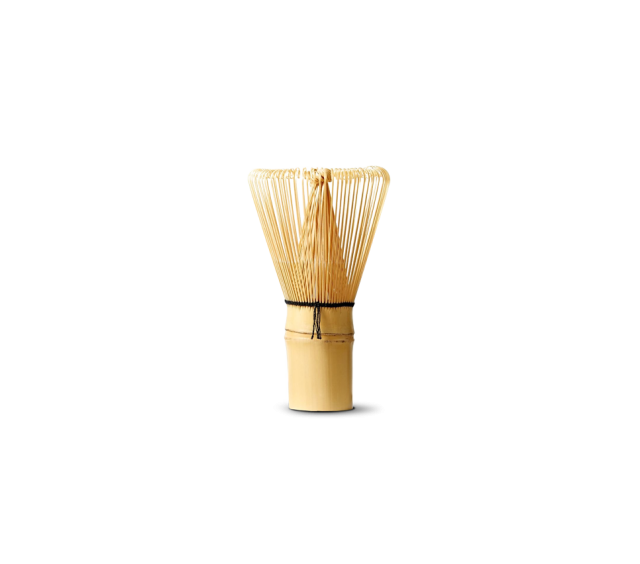
Bio Matcha Tea Ceremony is intended for ceremonial preparation using traditional tools. Place 2 chashaku scoops or 1 teaspoon of matcha in the tea bowl (chawan). Gradually pour a little water over the matcha and whisk the tea with the bamboo whisk, the chasen. Add the rest of the water and whisk the tea again into a thick foam.
Matcha is traditionally prepared in two ways, according to taste:
- Usucha is the milder version, in which 2 chashaku scoops or one teaspoon of tea are whisked in 70 ml of water.
- Koicha is a stronger, richer drink, for which 3–4 chashaku scoops or 2 teaspoons of tea are stirred into 40 ml of water.

Whisking and stirring with the chasen is always done vigorously in the shape of the letter M or W. Usucha is whisked until there is foam on the surface. Koicha has a thicker consistency and no foam forms, so stir until all the tea is evenly mixed in.
Summer or winter?
In summer, matcha is best enjoyed cold. In winter, a chawan of the hot drink will warm you up nicely. When preparing hot matcha, make sure that the water is no hotter than 70 °C. If the temperature were higher, the water would scald the tea and ruin its flavour and colour.
Can I flavour Bio Matcha Tea Ceremony?
Ceremony is intended for ceremonial purposes, and therefore for drinking in its original form. However, if you want to prepare a special drink for the people you care about, we recommend a few drops of lemon or lime in the summer months, or a little ginger or cinnamon in winter. Matcha can also be flavoured with a little high-quality syrup, or prepared with milk or a vegan alternative.
Ingredients
Ingredients
- 100% organic ground matcha green tea
Nutrition information per 100 g
| Energy | 1136 kJ / 271 kcal |
|---|---|
| Carbohydrate | 33.7 g |
| Protein | 26.6 g |
| Caffeine | 3.2 g |
| Fibre | 31.7 g |
| Total antioxidants | 12.2 g |
| Total amino acids | 2750 mg |
Certificates + tests
What certifications does Bio Matcha Tea Ceremony have?
At Matcha Tea, high quality is the priority. To offer customers a luxurious tea of a quality we would not be ashamed to serve even to Japanese nobility, we set great store by independent tests. Among the most important is the organic label, first awarded to Bio Matcha Tea in 2013 – the very first matcha tea in the Czech Republic to receive it. We successfully renew this certification every year. We also set great store by the Certificate of Product Safety awarded to us by the Czech National Institute of Public Health. And last but not least, we require proof of quality from our suppliers and the Japanese matcha growers as well. These are chiefly the JAS, OCIA, USDA, Bureau Veritas, ISO 9001 and Kosher certificates, among others.


Can I rely on Bio Matcha Tea Ceremony being tested regularly?
Yes, you can: we send every freshly imported batch of Bio Matcha Tea Ceremony to a specialist laboratory, where it is tested for the presence of pesticides, moulds, E. coli bacteria and heavy metals, including lead, for example. You can check the results of these tests for yourself at testy.kyosun.com. You will always find the batch number on the underside of the Bio Matcha Tea Ceremony tin.
What if I decide to buy a different brand of matcha?
When buying another brand, read the information about the tea carefully, especially the country of origin and the ingredients. Genuine matcha comes only from Japan. However, there are many cheap substitutes on the market that pass themselves off as matcha but often come from China. These teas are not steamed; instead, oxidation is prevented by ‘roasting’ them in a pan. Tea (un)treated in this way has a yellow to brown colour and a bitter taste, does not contain as many nutrients, and often contains high levels of dangerous substances such as heavy metals or moulds.
That is why it is better always to ask for up-to-date tests that match the current batch of the tea on offer.
Where is Bio Matcha Tea Ceremony produced?
The tea is grown in Japan. It is also processed, ground and packed into tins there, and then flown to the Czech Republic, to the Kyosun s.r.o. warehouse, where we lovingly pack it into boxes and are delighted to dispatch it to our customers.
Gallery
Ready to try it?