
Articles
Matcha and strawberry under the scientific lens: why we’re fans of this combination
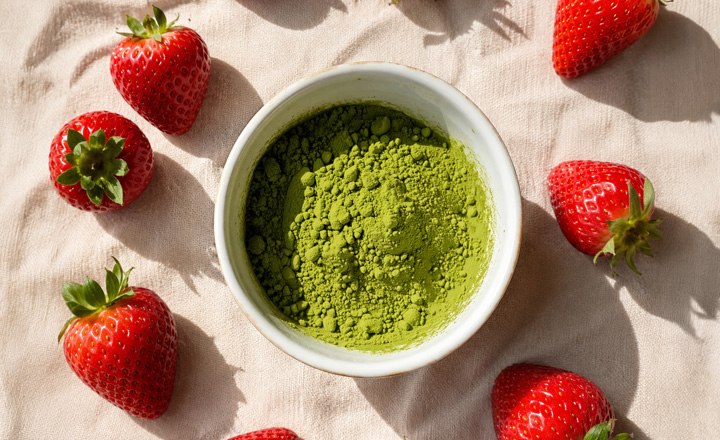
Matcha and strawberry under the scientific lens: why we’re fans of this combination
- Published
- 16. 09. 2026
- Matcha and strawberries are not just a beautiful green-and-pink pairing. A new study suggests that combining them may also be interesting from the perspective of bioactive compounds.
Matcha and Strawberry
When matcha and strawberry are mentioned, most of us picture a summery glass filled with ice, milk, and a layer of fruit at the bottom—something halfway between a dessert and a beverage. However, scientists approached this combination from a different angle: what happens when Japanese matcha is blended with strawberry powder and prepared at various temperatures?
A new study published in the journal *Frontiers in Nutrition* examined pure matcha alongside a blend consisting of 85% matcha and 15% strawberry powder. Researchers monitored changes in the levels of phenolic compounds, flavonoids, anthocyanins, and vitamin C, as well as antioxidant activity, when the samples were prepared at 5°C, 70°C, and 100°C. This was a laboratory—or *in vitro*—study, rather than clinical research involving human subjects.
Strawberries: A Great Match for Matcha
Interestingly, the strawberry powder in the blend altered the beverage’s environment. While pure matcha had a pH of around 6.2–6.3, the strawberry blend reached a pH of approximately 3.7. According to the study’s authors, this more acidic environment may have helped stabilize certain catechins during heat processing. In other words, the strawberry contributed not only flavor and color but also influenced—under laboratory conditions—how certain compounds within the matcha behaved during preparation.
The results showed that different temperatures „extracted“ slightly different properties from the beverage. At 100°C, the matcha-strawberry blend exhibited the highest antioxidant activity in DPPH and ABTS tests. At 70°C, the observed anti-inflammatory activity was most pronounced in the laboratory model. And at 5°C, vitamin C and anthocyanins—compounds more sensitive to heat—were best preserved.
What’s the takeaway for your kitchen?
It doesn’t mean that a single strawberry drink will work miracles. Rather, it points to something much more practical: the combination of matcha and strawberry makes sense not only in terms of flavor but also regarding nutritional composition. It also reinforces a simple culinary rule—preparation temperature can affect the final taste and color, as well as which compounds are best preserved in the drink.
For home preparation, a gentler approach is best: shake the matcha in water no hotter than 70°C or prepare it cold. Cold preparation works beautifully for fruit drinks, smoothies, and layered lattes—it preserves the fresh strawberry flavor and allows the matcha’s natural green color to shine.
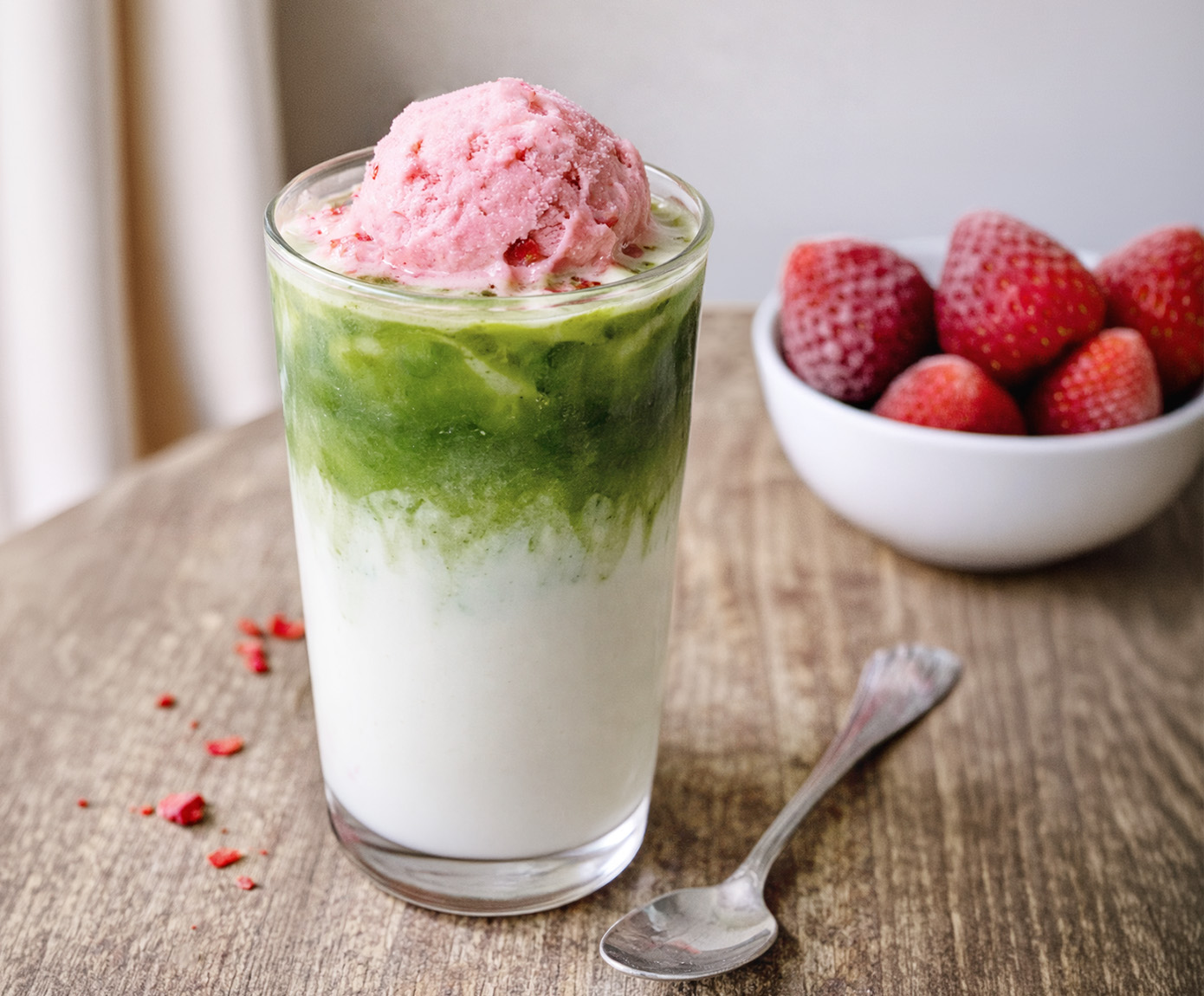
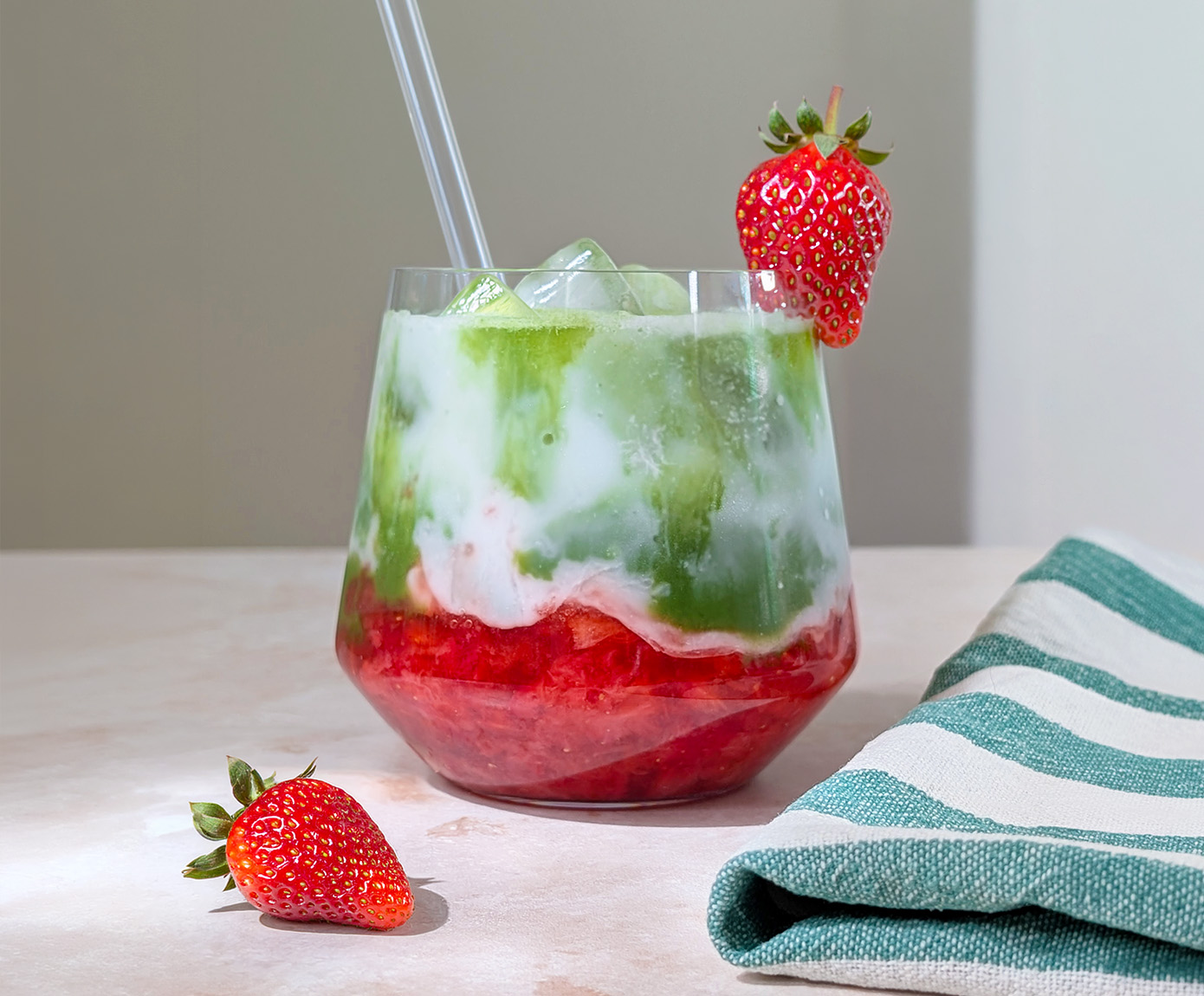
Our Tip: Matcha Strawberry Bliss
If you want to try this pairing for yourself, give our Matcha Strawberry Bliss recipe a go. Start by placing mashed or blended strawberries mixed with a little honey at the bottom of the glass, then add ice, milk, and finally the prepared matcha. The result? A layered drink that looks like a summer dessert but still retains its tea character.
Simple ingredients:
- strawberries
- milk or plant-based alternative
- Bio Matcha Tea Imperial
- water
- a little honey
- ice
Blend the strawberries with the honey, place the mixture at the bottom of the glass, and add ice and milk. Shake the matcha with water in a shaker and carefully pour it over the top.
And what if you’re short on time?
For a quick option, there’s Bio Matcha Tea Shake Strawberry. It’s perfect when you crave the taste of strawberries and matcha but want to skip the blender, the layering, and the lengthy preparation. Just shake it up, and you’re all set. Products like this show that matcha doesn’t have to be just a ceremonial ritual in a bowl—it can also be a practical part of your day.

Matcha and strawberry are a perfect match
Matcha and strawberries go together beautifully—visually, in terms of flavor, and in terms of preparation. Scientists have shown that this combination is also interesting from the perspective of bioactive compounds, yet the best thing about it remains its simplicity: fresh fruit, delicate green matcha, and a glass that delights you even before you take your first sip.
Source
ALEID, Nourh A.M.; ALHOMAID, Raghad M.; ALI, Rehab F.M. and ALAYOUNI, Raed. Synergistic enhancement of matcha tea with strawberry (Qassim region) aqueous extracts: influence of extraction temperature on phytochemicals, vitamin C, and bioactivities. Frontiers in Nutrition, 2026. DOI: 10.3389/fnut.2026.1824862.