
Articles
Japanese matcha vs. Chinese matcha
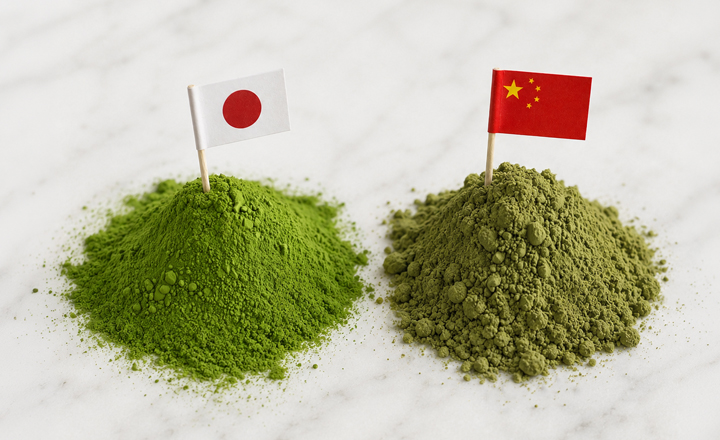
Japanese matcha vs. Chinese matcha
- Published
- 10. 06. 2026
- What is the real difference and why does origin play a key role?
What is real matcha?
Matcha is a finely ground green tea made from the leaves of the Camellia sinensis tea plant. Real matcha comes from Japan, where it is grown and processed according to centuries-old traditions. The tea bushes are shaded for 3-4 weeks before harvest, which increases the chlorophyll and amino acid content. The leaves are then hand-picked, steamed, dried, and ground in stone mills.
Chinese products labeled „matcha“ often do not follow this process or greatly simplify it.
📊 Main differences in the overview
| Feature | Japanese matcha | Chinese „matcha“ |
| Origin | Uji, Nishio, Aichi, Shizuoka | Various provinces |
| Shading | 3–4 weeks before harvest | Often none or short |
| Harvest | Hand-picking the best leaves | Mostly machine-made |
| Grinding | Stone mills | Industrial mills |
| Color | Deep green | Yellow-green, brownish |
| Flavor | Delicate, sweet with umami | Bitter, astringent, grassy |
Why is shade so important?
Shading the tea bushes is a key step that distinguishes matcha from regular green tea. When the plant is in the shade:
- The content of L-theanine increases – an amino acid that induces calm concentration
- The amount of chlorophyll increases – which is why quality matcha has a deep green color
- The bitterness decreases – fewer catechins mean a milder taste
Chinese products often skip this step because it is time-consuming and expensive. The result is a tea that resembles regular powdered green tea in taste and composition.

How to recognize quality Japanese matcha?
Color: Quality matcha has a deep green color, similar to fresh grass or jade stone. Yellow or brownish powder indicates a poor quality product.
Smell: Real Japanese matcha smells fresh and sweet, with subtle notes of freshly cut grass. Chinese substitutes often smell like hay.
Taste: Quality matcha has a delicate taste with natural sweetness and a pronounced umami. It should not be excessively bitter or astringent.
Solubility: Real matcha dissolves easily in water and forms a fine foam. Poor quality products clump together.
Certification: Trusted sellers provide BIO certification, laboratory tests for pesticides, heavy metals and mycotoxins.
Health disparities
| Parameter | Japanese matcha | Chinese „matcha“ |
| L-theanin | High content | Low content |
| Antioxidants (EGCG) | High content | Medium to low |
| Chlorophyll | High content | Low content |
| Pesticides | Regularly tested | Often untested |
| Heavy metals | Below limits | Risk of contamination |
How to choose the right matcha?
For everyday drinking and lattes:
Look for culinary grade or everyday matcha of Japanese origin.

For pure consumption:
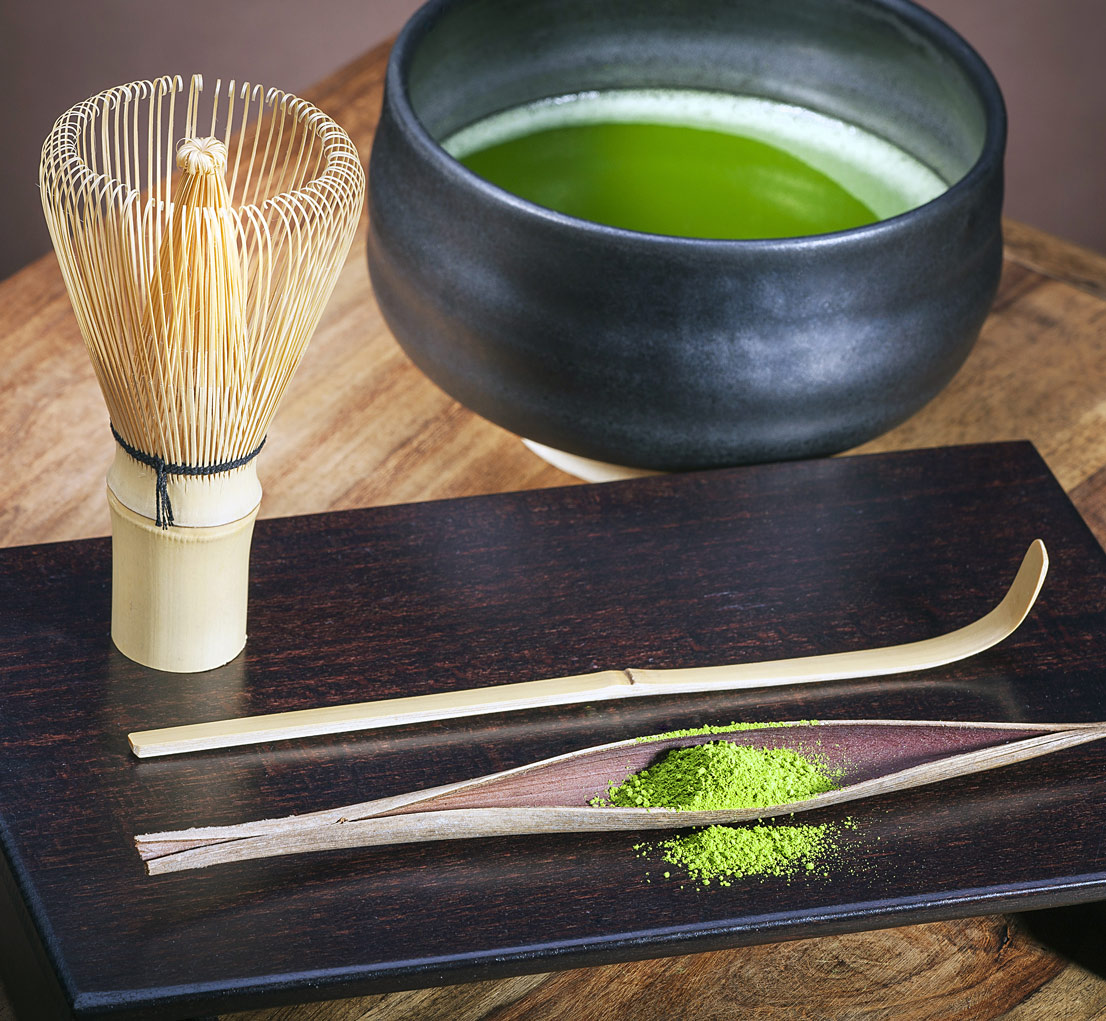
Choose premium or ceremonial grade matcha. You will appreciate the higher L-theanine content and smoother taste, especially when drinking without flavors.
For cooking and baking:
We also recommend Japanese matcha for culinary purposes. The quality will also be reflected in the finished dishes.

Frequently Asked Questions
Is Chinese matcha harmful?
It may not be directly harmful, but it often does not meet quality standards. Without certifications and tests, you do not know how many pesticides or heavy metals it contains.
Why is Japanese matcha more expensive?
The price reflects the demanding production process: hand harvesting, weeks of shading, slow grinding on stone mills and strict quality controls.
How to store matcha?
Cool, dark and dry. Ideally in an opaque container in the refrigerator. Once opened, consume within 1-2 months.
How much caffeine does matcha have?
One serving (2 g) contains approximately 60-70 mg of caffeine. Unlike coffee, caffeine from matcha is released gradually thanks to L-theanine.
Can pregnant women and children drink matcha?
Yes, in limited quantities. The recommended dose for pregnant women, breastfeeding women and children is approximately 2 g per day.
Is it worth investing in quality?
Definitely yes. The difference between Japanese and Chinese matcha is not just in price – it is in taste, color, aroma and, above all, in health benefits. If you want the real benefits of matcha tea – energy without jitters, antioxidants, L-theanine for calm concentration – invest in a quality Japanese product with certifications and transparent tests.
Matcha Tea from Kyosun s.r.o. imports genuine Japanese matcha from the Aichi and Shizuoka regions. Each batch is tested for pesticides, heavy metals and mycotoxins. Bio Matcha Tea Harmony has won the Product of the Year award on the Heureka.cz portal nine times in a row (2016–2024).